Interview dressing has one job: to remove clothing from the list of things anyone thinks about. If your outfit is remembered, it did not work.
Two principles cover most of it.
Dress one level above the room
Find out how people actually dress where you are interviewing. Look at the company website, its social accounts, or simply walk past at nine in the morning if it is local.
Then go one step smarter than that. Not two.
- Office wears jeans and trainers → smart trousers or a dark denim with a knit or a shirt
- Office wears smart casual → tailored trousers and a blazer, no tie
- Office wears suits → a suit
Overdressing by two levels reads as a misjudgement of the culture, which is a real signal to an interviewer. Underdressing reads as not having bothered. One level up says you understand the place and are treating the occasion seriously.
Wear something you have worn before
The most common avoidable mistake is a brand-new outfit on the day.
New clothes behave unpredictably. A collar sits oddly, a waistband digs in when seated, shoes rub, a jacket restricts the shoulders when you reach to shake hands. You spend the interview managing your clothes instead of thinking.
If it is new, wear it for a full day first. Sit in it, walk in it, put a bag over the shoulder.
The details that actually matter
Fit above everything. A well-fitting inexpensive outfit beats a badly-fitting expensive one every time, and it is the difference people register without being able to name. The shoulder is the part to check — how a blazer should fit covers it.
Shoes, clean. The most-noticed and least-considered item. They do not have to be expensive; they do have to be looked after.
Nothing that needs managing. No skirt you have to adjust when you sit, no heel you cannot walk in across a car park, no neckline that needs checking. Anything that occupies your attention is taking it from the conversation.
Layers, because you cannot predict the room. Interview rooms are either overheated or freezing. A jacket or cardigan you can remove solves both.
One considered detail. A good watch, a decent bag, a well-chosen colour. Enough to look like you made a decision, not enough to be a talking point.
Colour
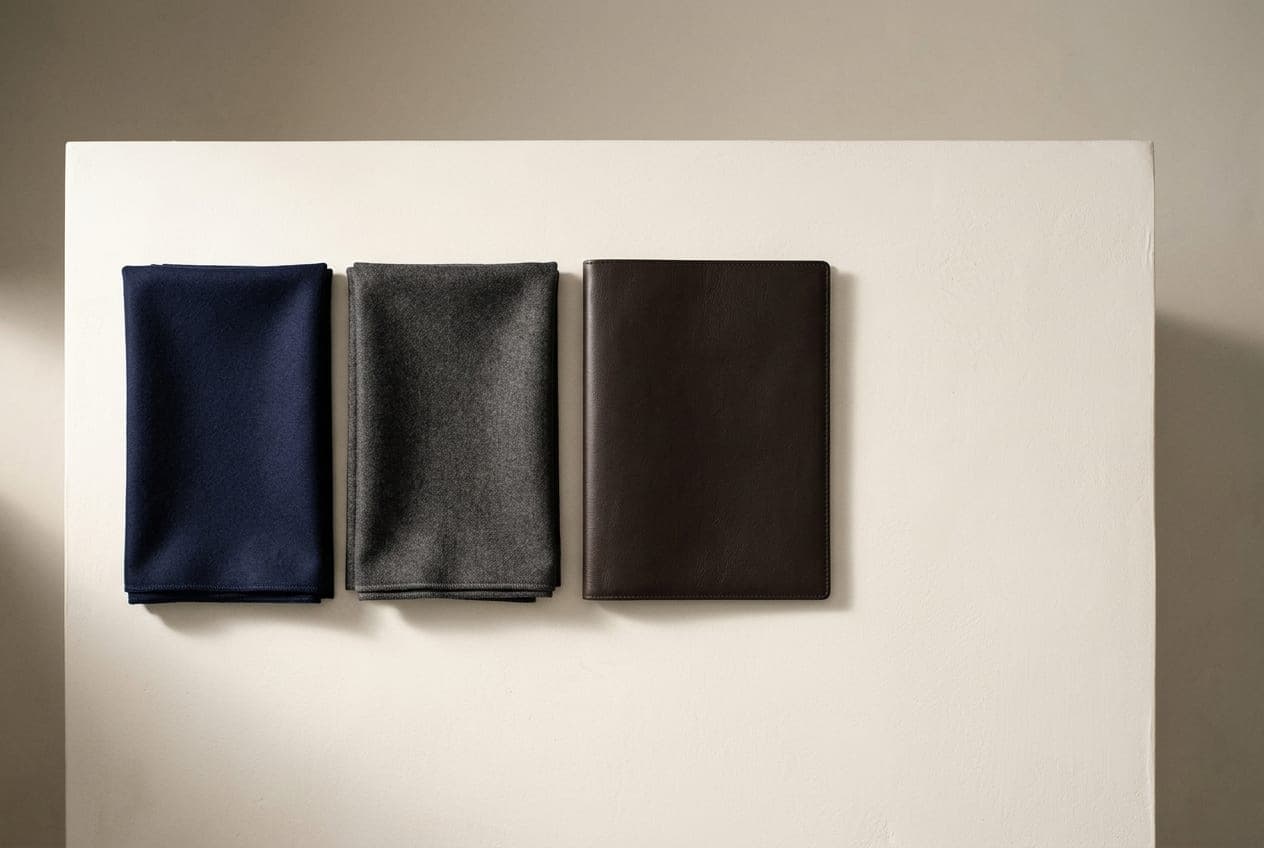
Keep it in the calmer half of your palette. Navy, grey, and your own version of a dark neutral all work in almost any setting.
The useful move is to put a colour that genuinely suits you near your face — a shirt, a knit, a scarf — because that is what lifts your complexion in a room with unflattering overhead lighting, which most interview rooms have. A colour from your own season palette does this; a colour outside it does the opposite. The free quiz will place you.
Avoid very bright or very high-contrast combinations unless the role is a creative one where they say something.
Video interviews
Different rules for the top half.
- Mid-tone solid colours read best. Fine stripes and small checks shimmer on camera.
- Avoid pure white, which blows out, and pure black, which flattens against most backgrounds.
- Check yourself on the actual camera in the actual light beforehand. Webcams handle colour badly and the result is often not what the mirror showed.
- Dress fully anyway. It changes how you sit.
The short version
One level above the room, worn before, fitting properly, clean shoes, and a colour near your face that suits you. Nothing on that list is expensive.