A winter coat is worn most days for five months, over everything else, in the worst weather of the year. It is simultaneously the hardest-working garment in a wardrobe and the most visible one.
It is also the purchase most often made badly, because it is expensive enough to feel like a decision and urgent enough to be rushed.
Start with the shoulder
The shoulder seam is the one thing on a coat that cannot be altered affordably. Everything else can be adjusted — sleeves shortened, waist taken in, length raised — but the shoulder is the garment's architecture.
The seam should sit at the edge of your shoulder, where the arm begins. If it hangs down your upper arm, the coat is too big and will look borrowed no matter what else is right. If it cuts inside your shoulder, it will pull across the back and wear out at the seam.
Check it with a jumper on. A coat fitted over a t-shirt in a warm shop is a coat that does not close in January.
What the fabric label predicts
The composition tells you how the coat will behave in a way the photograph cannot.
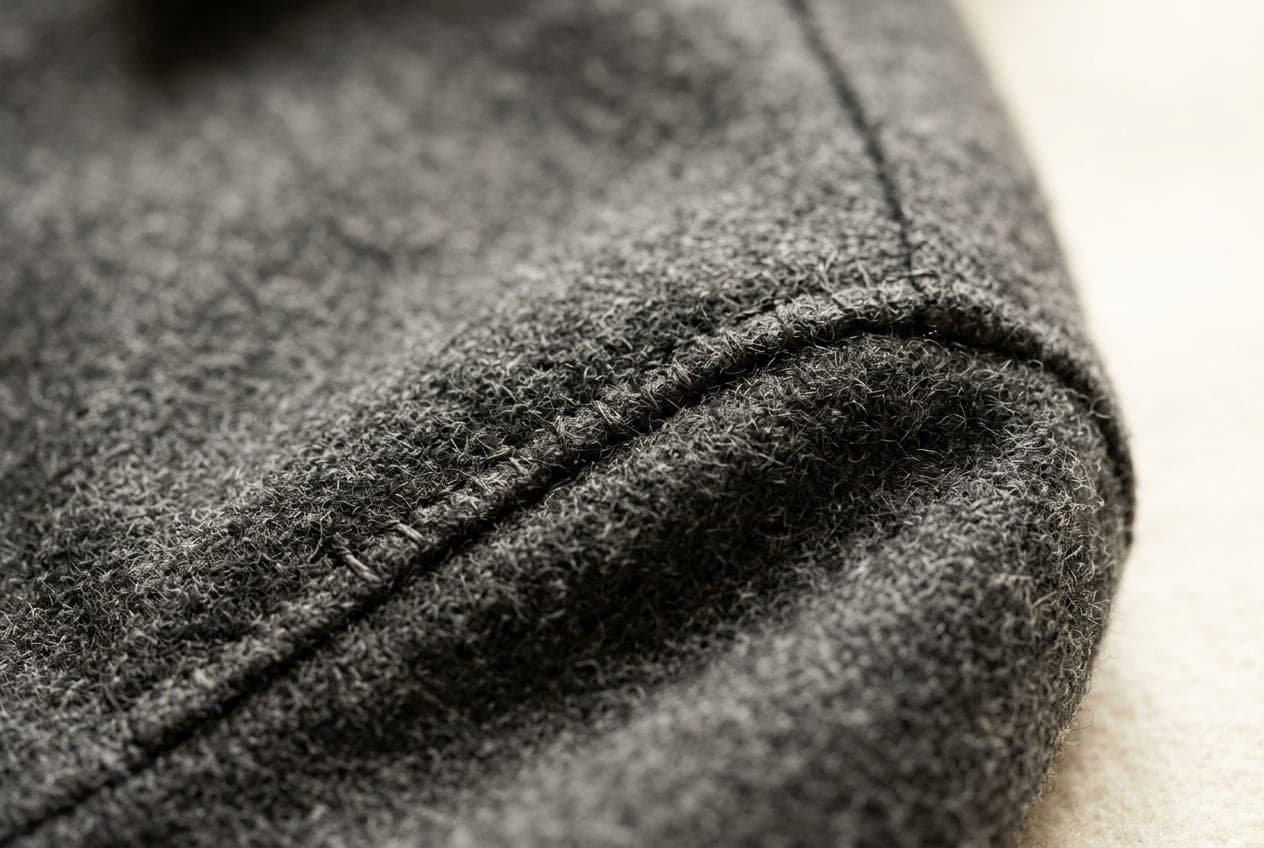
Wool content is the number that matters. Above about 70% wool, a coat will hold its shape, resist wind and last years. Below about 50%, it will pill, flatten at the friction points and start looking tired within two winters.
Watch for the filler fibres. Small amounts of nylon or polyamide add strength and are a good sign. Large amounts of polyester or acrylic are there to reduce cost, and they are why some coats look worn out by February.
Cashmere in a coat is not automatically an upgrade. It is softer and warmer by weight but it pills faster and takes friction badly, and a coat spends its life being rubbed by a bag strap. A high-wool coat usually outlasts a cashmere blend.
The composition label piece covers reading these quickly.
The lining nobody checks
Turn the coat inside out. This takes ten seconds and tells you most of what you need to know about how it was made.
A lining that is stitched neatly, sits flat and is made of something slippery is a good sign — it means the coat will go on over a jumper without dragging, and the seams have been finished properly. A thin, papery lining that is already puckering is the clearest signal you will get that the coat has been built to a price.
Check the armhole while you are in there. A high, clean armhole lets you move your arm without lifting the whole coat. A low, boxy one is cheaper to make and restricts you every time you reach for something.
Length and what it does
Length is mostly a proportion decision, and there are only three useful positions: above the knee, at the knee, or well below it. Anything landing exactly at mid-calf is the hardest to wear, because it cuts the leg at its widest point.
Shorter coats read as more casual and keep your legs visible, which usually makes you look taller. Longer coats are warmer and read as more formal, but they need enough length to look deliberate rather than accidental.
The colour decision
This is where a coat is most often wasted. It is the garment worn closest to your face, every day, for five months — so a colour that does not suit you is a colour you will see in every photograph taken of you all winter.
Black is the default and it is the right answer for roughly a quarter of people. For the rest, a warm brown, a camel, a deep navy or a charcoal does the same job better. Which one depends on your colouring, and the colour hub covers it properly — or the free quiz gets you to a season in two questions.
What it actually costs
A coat is the clearest case in a wardrobe for cost per wear. Worn four days a week for five months is around eighty wears a year. Over five years that is four hundred wears, which turns a coat that felt expensive into one of the cheapest things you own per use.
The corollary is the useful bit: a cheap coat that gets replaced every second winter is not the saving it appears to be, and it looks worse for most of its life.
Before committing, it is worth checking what similar coats cost elsewhere — the spread on outerwear between shops is wide, and the difference in construction often is not. DUPI takes a photo of a coat you have seen and finds the closest matches at prices that are actually listed.