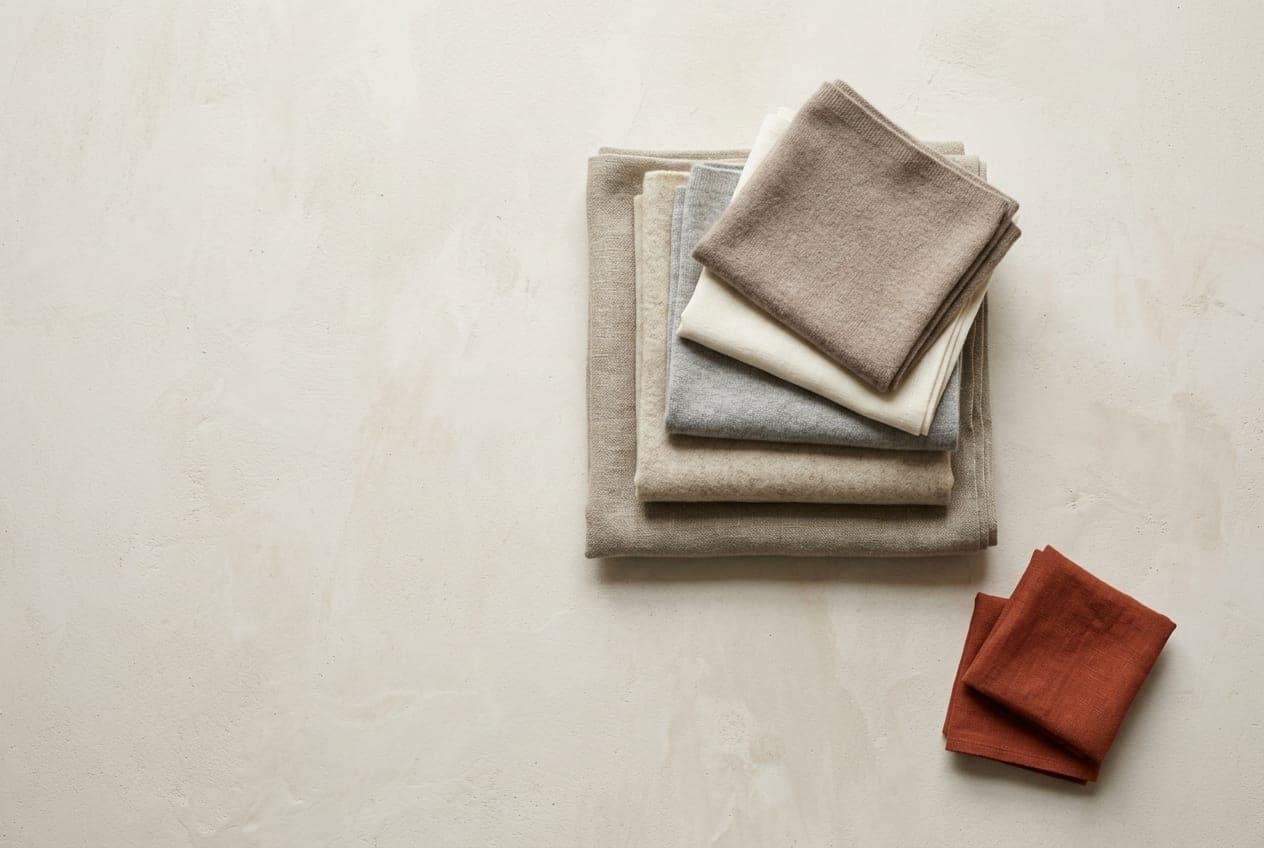
The usual capsule wardrobe advice hands you a list of garments — a white shirt, a trench, a pair of dark jeans — and assumes the colours will sort themselves out. They do not, and that is why so many capsules end up as a drawer of things that technically match and never get worn together.
Start from colour instead. It is a shorter route and it survives contact with actual shopping.
Why neutrals first
Look at what you own. Somewhere between two thirds and three quarters of it is neutral — the trousers, the coat, the knitwear, the bag, the shoes. Statement colour is the visible part but it is the minority of the volume.
Which means the highest-leverage decision in your entire wardrobe is which neutral you treat as your default dark. Get that right and everything you own starts agreeing with everything else. Get it wrong and you spend years wondering why a wardrobe full of good things produces so few good outfits.
Every season has a version of black, and for most seasons it is not black.
- Spring — warm greige, camel, golden coffee
- Summer — soft navy, dove grey, cool taupe
- Autumn — espresso, chocolate, warm taupe, olive
- Winter — true black, charcoal, cool deep navy
Winter is the only season for which black is the honest answer rather than the default one.
The structure
Two neutrals, one metal, three colours. That is the whole system.
Your dark neutral. The one above. This is your trousers, your outerwear, your boots, your bag. It should be the colour you own most of.
Your light neutral. Your version of white — cream for warm seasons, cool white or soft grey for cool ones. This is shirts, tees, the inside layer. Cream and optic white are not interchangeable and swapping one for the other at the neckline is the most common quiet mistake in a wardrobe.
One metal. Warm seasons wear gold, cool seasons wear silver, neutral colouring often looks best in rose gold. Pick one and let it run through your jewellery, your watch, your belt hardware and your bag fittings. Mixing metals is a deliberate choice that works; mixing them by accident reads as a mismatch.
Three statement colours. From your season palette, chosen so that each one works with both neutrals. Three is enough for variety and few enough that you will actually wear all three.
Working out how far it stretches
Two neutrals that agree with each other, plus three colours that each agree with both, produces far more combinations than the number of garments suggests. That is the entire point — a capsule is not about owning less, it is about owning things that combine.
The test for any new addition is simple. Does it work with both neutrals? If it only works with one, it is not a capsule item, it is the start of a second wardrobe.
Where it goes wrong
Three failure modes account for nearly all of it.
Buying the palette instead of the wardrobe. A colour card is not a shopping list. You need the colours in the shapes you actually wear, in the fabrics you actually like.
Ignoring the light neutral. People agonise over statement colours and then buy whatever white shirt is in front of them. The shirt is nearer your face than almost anything else you own.
Treating it as a one-off purchase. A capsule assembled in a single weekend is a uniform bought in a panic. Replace as things wear out, in the right colours, and you get there in a year without a large bill.
Getting your palette
If you already know your season, the colour pages list the neutrals and statement colours for all four seasons and the twelve sub-seasons, including which white and which metals.
If you do not, the free quiz gets you to a season in two questions, and What colour season am I walks through the tests if you would rather work it out yourself.
Then DUPI can search real shops for things in your palette, which is the part that turns a colour card into clothes.