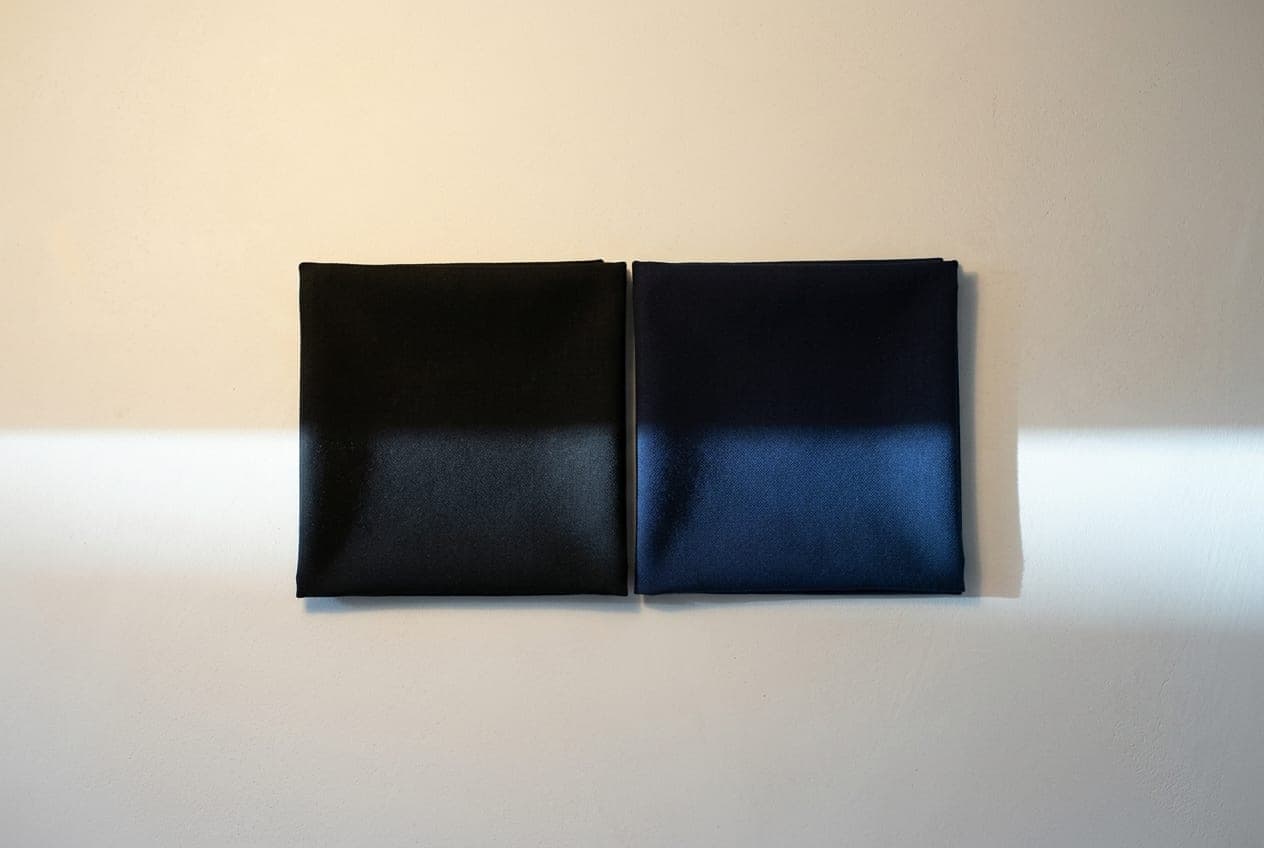
From the end of October, most people in Britain get dressed before it is properly light and leave the house in the dark. It sounds trivial and it quietly degrades how well people dress for five months.
There are two separate problems, and they have different fixes.
Problem one: you cannot see colour properly
Artificial light lies. Warm bulbs push everything yellow, cool LEDs push everything blue, and both flatten the difference between very similar dark shades.
The practical consequences are specific and familiar: navy and black look identical in a bedroom and obviously different on a train. A faded black and a true black look the same on a hanger. Two greys that clash look fine until nine in the morning.
The fix is not better lighting. It is removing the need to judge colour at seven in the morning:
- Hang things that go together next to each other, rather than by type
- Keep navy and black in separate parts of the wardrobe entirely
- Deal with faded black by checking everything by a window once, in daylight, and retiring what has gone
On that last point, mixing a faded black with a true black is the single most common way a winter outfit looks tired, and it is invisible under a bedroom light. More on that in the all-black outfit, done well.
Problem two: you are making decisions badly
Decision-making at seven in the morning in the dark is poor, and the outfits reflect it. This is why so many people wear the same three things all winter and feel vaguely unimpressed by their wardrobe.
The answer is not discipline. It is to make the decisions at a time when you are capable of making them.
The night before is the obvious version and it genuinely works, but it requires remembering. The more durable version is to reduce the number of decisions permanently:
- Pick two neutrals for the season and make sure most of what is accessible is one of them. Everything then goes with everything.
- Keep one complete default outfit that is always clean and always works. Any morning that is going badly, that is what you wear.
- Put the accessible things at eye level. What is easy to reach is what gets worn, so that space should hold the things you actually want to wear.
The colour that survives bad light
Some colours hold up under winter light and some collapse.
Muted and dusty colours need daylight to read properly. Under a bad bulb they go grey and the whole outfit looks flat. Clear colours and genuine neutrals hold their character.
This is not a reason to abandon a muted palette if it suits you — it is a reason to know that a soft mauve looks its best at midday and a bit unconvincing at eight in the morning, and to put the clearer things nearer the front of the wardrobe in winter.
If you do not know which neutrals actually suit you, the colour hub covers it, and the free quiz gets you to a season in two questions.
Visibility, which is not a style question
If you walk or cycle any part of a dark commute, being seen matters more than anything else in this article.
This does not require a high-visibility jacket. A pale coat, a light-coloured bag, or anything reflective on the moving parts — wrists, ankles, the back of a bag — does most of the work. Movement is what drivers actually notice.
It is worth checking that the coat you wear every day in the dark is not entirely black, or if it is, that something on you is not.