Undertone is the cast that sits underneath your skin. It is fixed — it does not shift with a tan, with the seasons, or with how much sleep you have had. Everything else in colour analysis is built on top of it, which is why getting it wrong sends the rest off course.
There are three answers: warm, cool, and neutral.
Read it in daylight or do not bother
Before any test, one rule. Stand by a window, in daylight, with no make-up on and away from strongly coloured walls. Warm indoor bulbs push everyone toward a warm reading, and a bright bathroom light flattens the difference entirely. More wrong answers come from bad lighting than from bad technique.
The four tests worth running
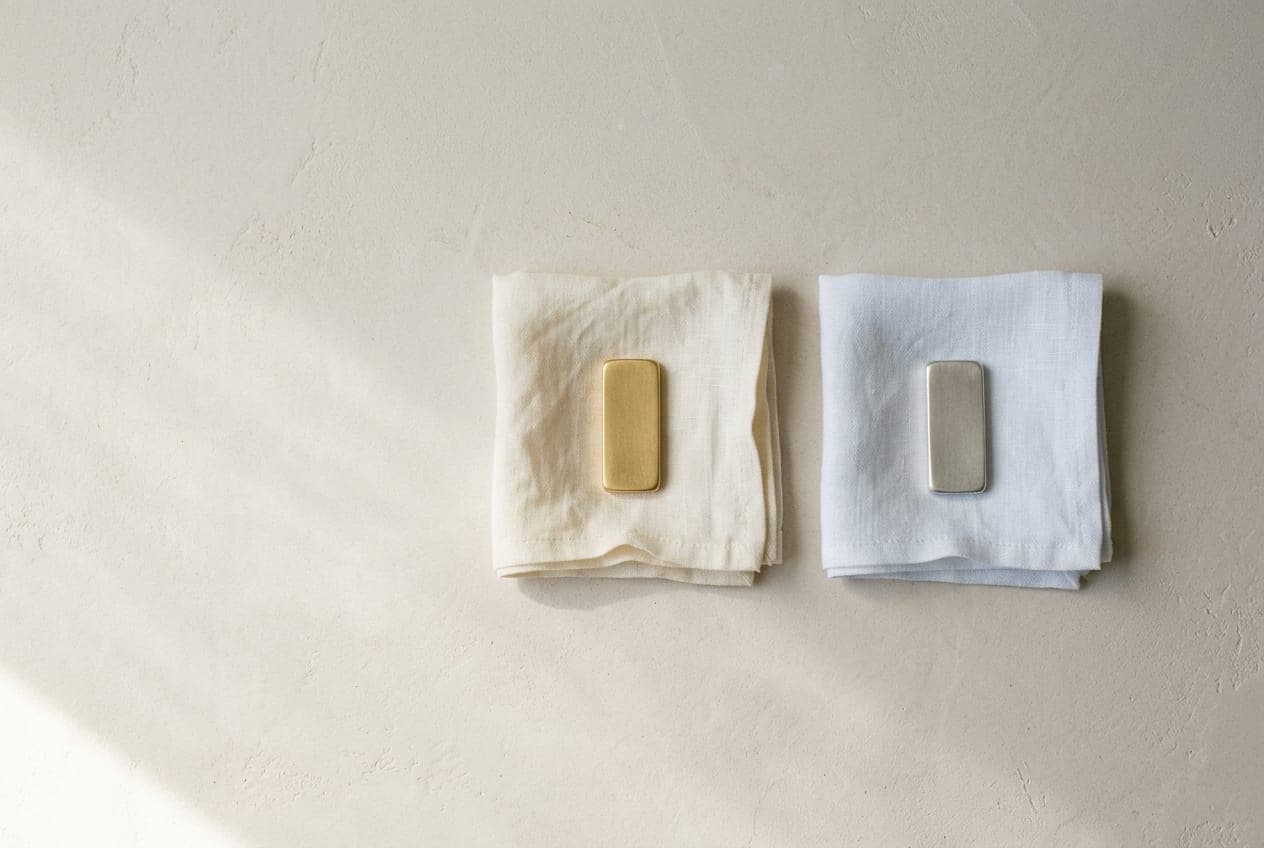
Gold against silver
The most reliable single test. Hold something yellow-gold near your face, then something silver, and watch your skin rather than the metal.
Warm colouring looks even and rested against gold, and slightly grey or drained against silver. Cool colouring looks clear and bright against silver, and a little sallow against gold. If you genuinely cannot separate them, note it and move on — that is a neutral signal.
Cream against optic white
Hold a soft cream next to a crisp optic white, right up under your chin.
Warm skin looks healthy against cream, and the optic white tends to make it look tired. Cool skin looks clean against the optic white, and slightly yellow against cream. This test is useful because it is a decision you actually make when buying a shirt.
Coral against fuchsia
Two strong colours at the same depth, one warm and one cool.
Warm colouring holds coral comfortably and looks slightly overtaken by fuchsia. Cool colouring wears fuchsia easily and finds coral turns the skin ruddy. This one is good at confirming a result the metals test only hinted at.
Your best-ever colour
Less scientific, more honest: think of the colour you have been complimented on. Not the one you like — the one other people notice.
Warm people usually name something earthy or golden. Cool people usually name something blue-based. It is not proof, but it is a strong tiebreak when the tests disagree.
Why the vein test does not work
The advice to look at the veins on your wrist — blue means cool, green means warm — is everywhere, and it is close to useless.
Two reasons. Vein colour is mostly a function of how much fat and how much melanin sit above the vessel, which varies enormously between people with the same undertone. And you are reading the skin on the inside of your wrist, which is one of the least sun-exposed and least representative patches on your body. The colour you are trying to judge is the one on your face, next to the collar of the thing you are buying.
If the vein test is the only one that gives you a clear answer, treat it as the weakest evidence you have, not the strongest.
What neutral actually means
Neutral does not mean you have no undertone. It means neither warm nor cool dominates strongly enough to rule the other out.
In practice, neutral colouring:
- handles both gold and silver, and often looks best in rose gold, which sits between them
- suffers more from colours being too bright than from them being too warm or too cool
- usually lands in one of the muted seasons, where softness rather than temperature is the organising idea
If every test above came back ambiguous, stop hunting for a temperature and start looking at clarity instead. That is likely the attribute doing the real work on you.
Where undertone sits in the bigger answer
Undertone gets you halfway. Depth — how much darkness your colouring carries overall — gets you the rest of the way to one of four seasons, and clarity narrows that to one of twelve.
- Warm and light points to Spring
- Cool and light points to Summer
- Warm and deep points to Autumn
- Cool and deep points to Winter
The free quiz runs the same logic in two questions, and What colour season am I walks through depth and clarity in the same detail as this piece does undertone.