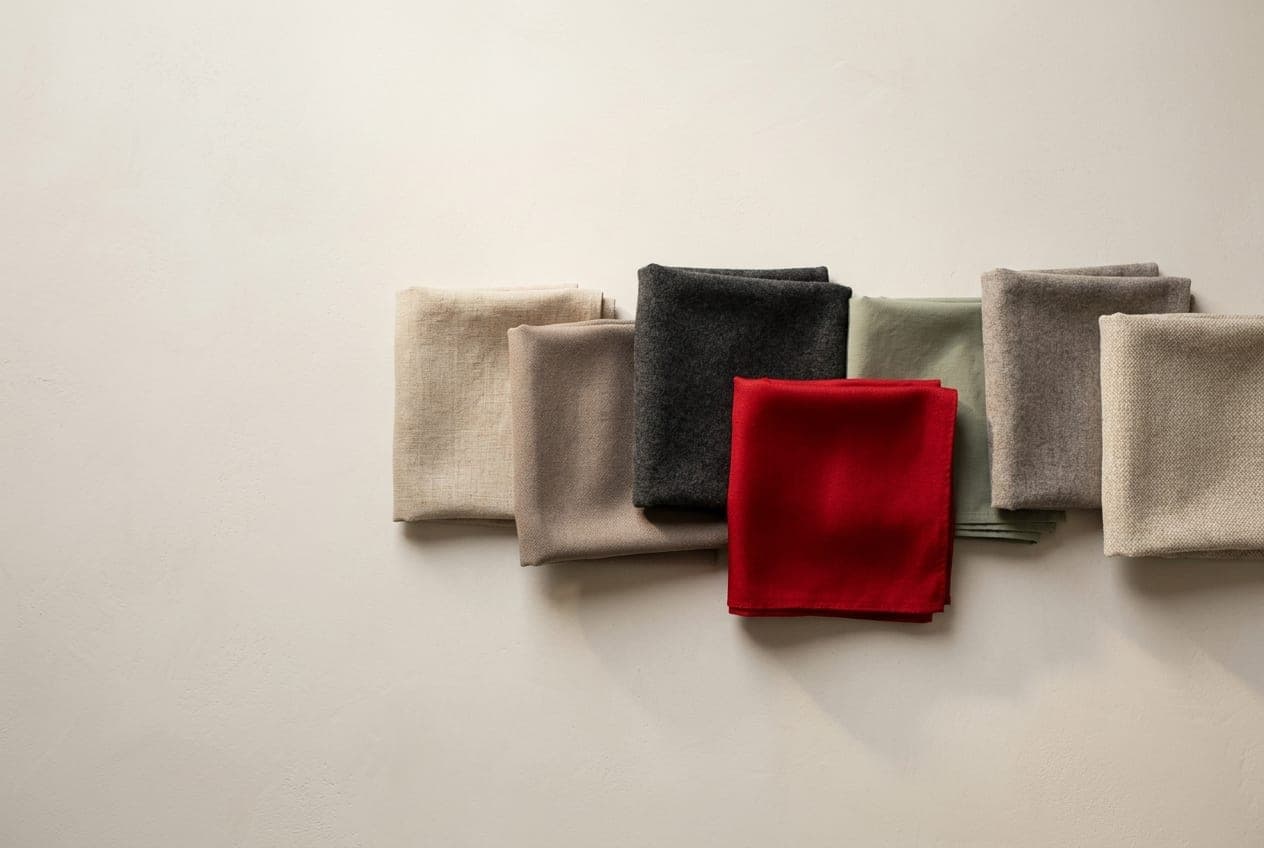
Most wardrobes are mainly neutral, and most people who say they cannot wear colour have simply never had a method for it. Here is one.
Start with the anchor, not the colour
The mistake is to buy the colour first and then work out what goes with it. Reverse that.
Pick the neutral you already own most of — your version of black, whatever that is for your season — and choose a statement colour that works against it. That way the new colour walks into a wardrobe that already agrees with it, rather than sitting in a drawer waiting for something to be bought to go with it.
If you do not know your version of black, it is on your colour season page. It is rarely actually black.
The three-quarters rule
A reliable proportion: about three quarters neutral, one quarter colour.
That translates to one strong colour at a time — a knit, a coat, a trouser, a bag — against neutrals everywhere else. It reads as deliberate. Two statement colours at once reads as an outfit that is trying, and three reads as fancy dress.
The exception is a tonal outfit, where the whole thing is one colour in several depths. That works precisely because it is not a contrast; it is a single decision carried through.
Put the colour where you want to be looked at
This is the part most guides leave out and it does more than anything else on this list.
Colour draws the eye. Whatever you put it on is what people look at. A bright knit puts attention on your face and shoulders. Bright trousers put it on your legs. A bright bag puts it at wherever the bag hangs.
Decide where you want the attention and place the colour there. It is not more complicated than that, and it explains why the same colour can feel great in one garment and wrong in another.
Near the face, it has to suit you
There is a real difference between a colour worn near the face and one worn below the waist.
Near the face, the colour is reflecting onto your skin and it either helps or it does not. This is where your palette genuinely matters — a colour outside it will make you look tired in a way that is hard to name but easy to see.
Below the waist, almost anything goes. A colour that does not suit you at all is perfectly wearable as a shoe or a trouser, because it is nowhere near your face. This is the single most useful loophole in colour analysis and hardly anyone uses it.
Choosing the colour
If you want one statement colour to start with, take it from the statement half of your season palette rather than from a trend. Every sub-season page lists them.
Two practical tips:
- Buy it in something you will actually reach for. A statement coat gets worn far more than a statement dress.
- Buy it in a good fabric. Colour shows fabric quality more than neutrals do. A flat, cheap fibre in a strong colour looks cheap in a way that the same fibre in navy does not.
If you are still nervous
Start below the neck and away from the face. A coloured shoe, a bag, a scarf that stays off the skin. Live with it for a month.
Then move it up. Most people who think they cannot wear colour are actually reacting to having worn the wrong colours near their face, which is a different problem with a specific solution — the free quiz takes two questions.