Both are cool. Both are soft. Both look worse in black than almost anyone expects. If you have landed on Summer and cannot work out which one you are, you are in the majority.
Here is what actually separates them.
The short version
Light Summer is light first, cool second. The defining feature is that the whole colouring is pale and airy — light hair, light eyes, light skin, with very little distance between them.
Soft Summer is muted first, cool second. The defining feature is that everything is blended and greyed. The depth is usually a step deeper than Light Summer, and the whole face reads hazy rather than pale.
The confusion happens because low contrast looks similar to low depth at a glance. They are not the same thing.
Tell one: depth against blending
Squint at yourself in a mirror in daylight until the detail goes.
A Light Summer dissolves. The impression is pale all over, with nothing much anchoring it — hair, skin and eyes all sit in the top half of the range.
A Soft Summer holds together as a soft mid-toned shape. It does not go pale; it goes hazy. There is more depth there than a Light Summer has, but none of it is sharp.
If you cannot tell whether you are seeing pale or hazy, look at your hair against your skin specifically. A Light Summer has genuinely light hair. A Soft Summer often has mid-brown hair that reads ashy rather than light.
Tell two: what a clear pastel does to you
This is the most decisive test, and you can run it with two things from your own wardrobe.
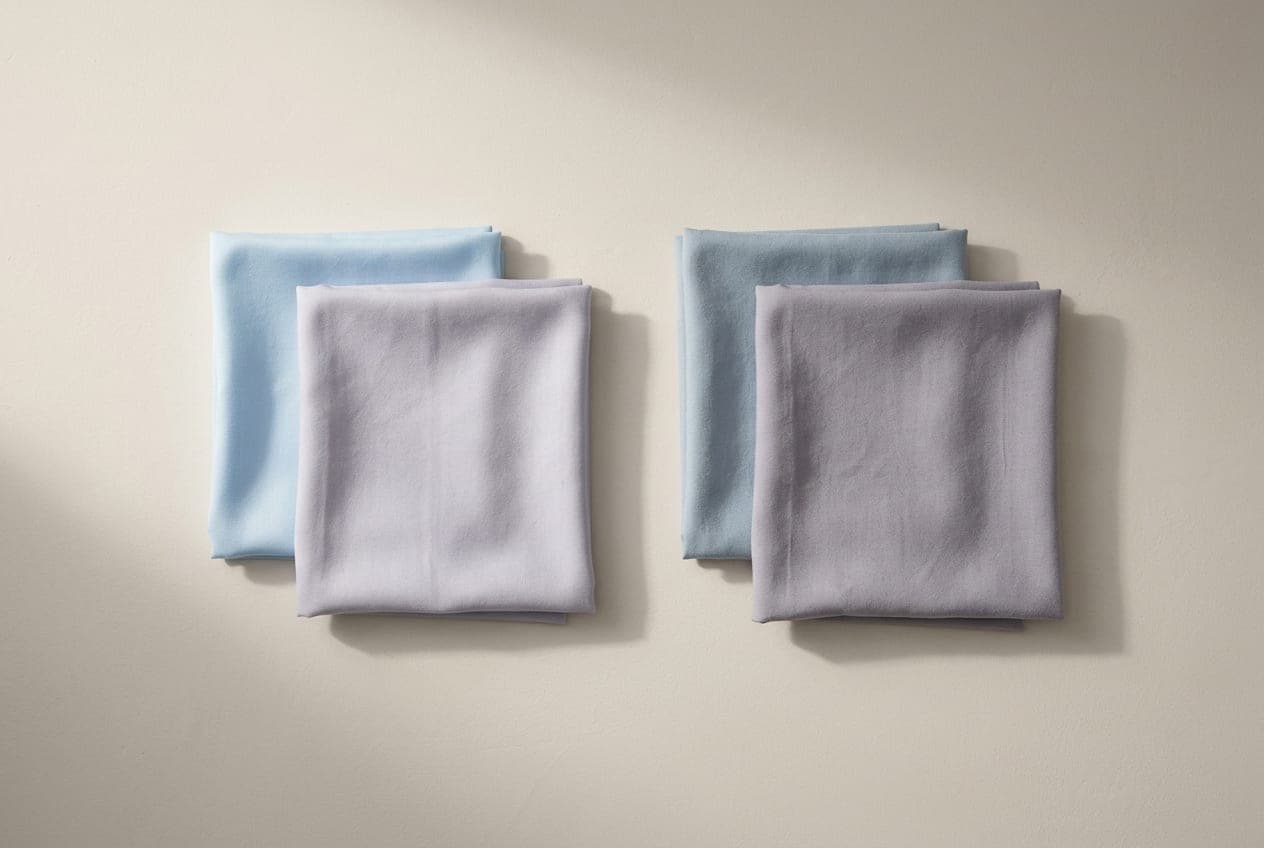
Find a clear, light cool colour — a clean powder blue, a fresh icy pink. Then find a dusty, greyed version — a mauve, a soft sage-grey, a muted rose.
- Light Summer looks fresh and awake in the clear pastel. The dusty one leaves you looking slightly flat and tired.
- Soft Summer looks settled in the dusty one. The clear pastel looks like it is sitting on top of you rather than with you, and often makes the skin look a bit pink.
If the clear pastel wins, you are Light Summer. If it feels faintly chalky and unconvincing, you are Soft Summer.
Tell three: how much colour you can carry at once
Light Summer can take a full outfit of light cool colour and look coherent — a pale blue with a soft grey, top to bottom, works.
Soft Summer needs the colours to stay close together in depth and chroma, and starts to look overwhelmed as soon as anything gets clean. A Soft Summer in an all-pastel outfit tends to look washed rather than fresh.
There is a warmth clue here too. Soft Summer sits on the border with Soft Autumn and can carry a whisper of warmth — a soft olive, a greyed camel. Light Summer cannot; those go muddy immediately.
What changes if you get it right
The practical differences are worth the effort of pinning it down.
| Light Summer | Soft Summer | |
|---|---|---|
| Your black | Soft slate blue-grey | Cool charcoal |
| Whites | Soft cool white | Off-white, never optic |
| Metals | Silver, soft rose gold | Pewter, muted silver |
| The mistake | Wearing anything too dark | Wearing anything too clean |
Getting the neutral right matters more than getting any single colour right, because the neutral is most of what you own.
Still stuck
If you have run all three tells and it is still even, two things help.
Read both pages in full — Light Summer and Soft Summer — and notice which description you recognise rather than which palette you prefer. They are different reactions and the first one is the honest signal.
Then check the neighbours on the other side. A Light Summer who is not quite convinced should look at True Summer; a Soft Summer who is not should look at Soft Autumn, which shares the muting and adds warmth.
If you would rather not decide by eye, DUPI reads the sub-season from one photograph. The free quiz confirms the parent season in two questions first.