Winter weddings are a different problem from summer ones. The dress codes are the same, but the day involves a cold church, twenty minutes standing outside for photographs, and a venue whose heating is either off or overwhelming.
The general dress-code question is covered in wedding guest dress codes, decoded. This is the cold-weather part.
Fabric does the work
The single biggest difference between a comfortable winter wedding and a miserable one is what the outfit is made of, not how much of it there is.
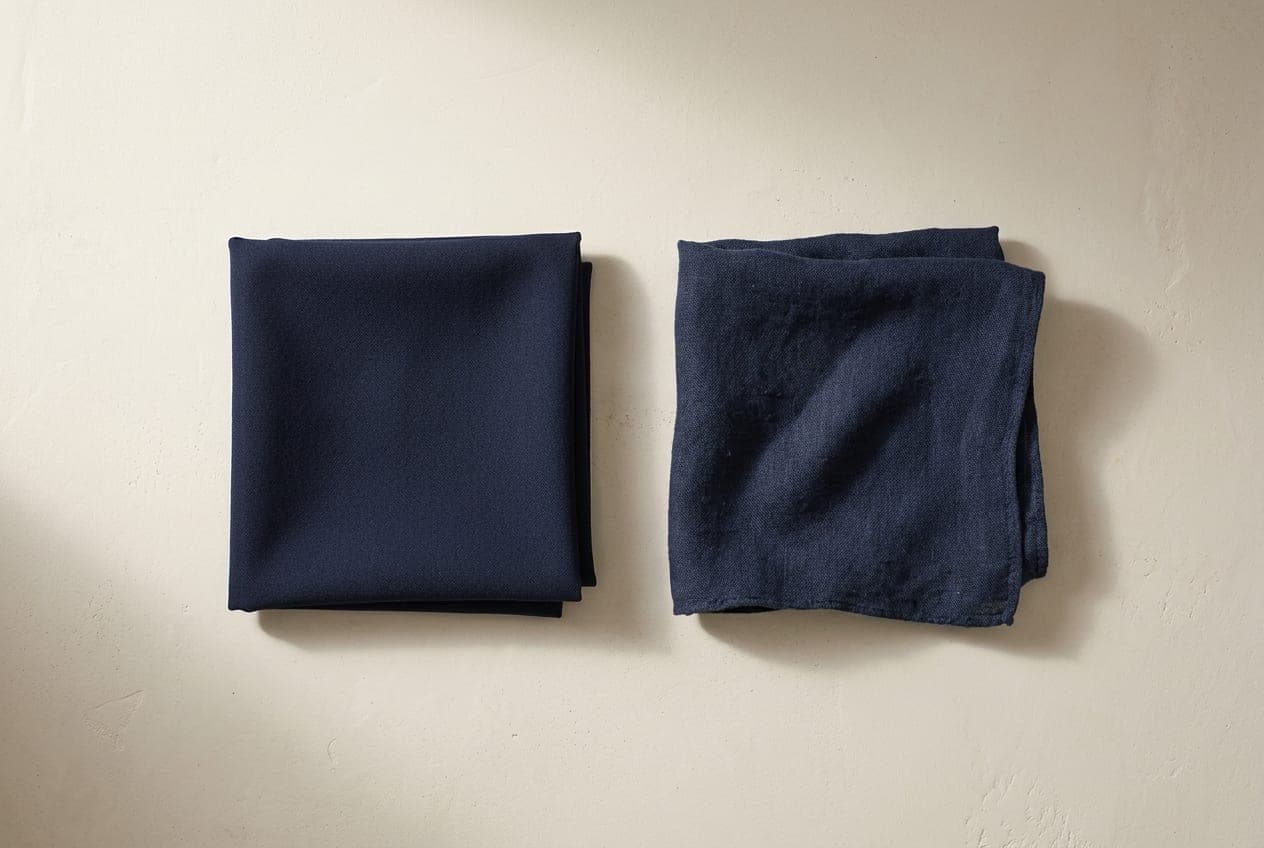
What works: wool crepe, heavier satin, velvet, jacquard, ponte, thick jersey, tweed. All of these have weight, hold their shape, and keep some warmth.
What does not: chiffon, thin georgette, unlined lace, anything described as floaty. These are summer fabrics. In a cold church they are cold, and in photographs they move in the wind in ways that are not flattering.
Velvet is the specifically seasonal answer — warm, formal, photographs well under artificial light, and it reads as deliberate for winter rather than borrowed from July. More on how it behaves in velvet, sequins and satin.
The coat is part of the outfit
This is the thing summer weddings never require you to think about, and it is where most winter guest outfits fall down.
You will be photographed in your coat. Standing outside the church, arriving, at the drinks. If the coat is your everyday waterproof, that is what is in the photographs.
The fix does not require buying a formal coat. It requires the coat being plain, dark and well-fitting rather than technical. A plain wool coat over anything reads as appropriate; a hooded parka does not, regardless of what is underneath.
If the coat is genuinely wrong and you go to winter weddings regularly, one plain dark wool coat is a purchase that keeps paying — and it does the school run and the office too.
Legs, which is the real decision
Most of the discomfort at a winter wedding is below the knee.
Opaque tights are acceptable at almost every winter wedding, in a way that would look wrong in July. Sheer tights in December are a choice to be cold for no visible benefit. A dark opaque tight with a dark shoe also lengthens the leg, which is a bonus.
If the dress code is formal enough that opaques feel wrong, a longer hemline solves the same problem and is the more elegant answer anyway.
Shoes need to survive gravel, wet grass and a car park. A block heel stays on top of soft ground where a stiletto sinks. Bringing a second pair for the evening is normal and nobody minds.
Layering that survives the whole day
A winter wedding runs from a cold church at two to a warm room at ten. One outfit has to do both.
The workable structure is a sleeveless or short-sleeved dress with a separate warm layer — a wrap, a fitted jacket, a fine knit — rather than a single warm dress. The layer comes off when the room heats up. A long-sleeved heavy dress has no adjustment available and becomes unbearable by the speeches.
A large wrap or pashmina is the most useful single item: it works over shoulders in the church, round the neck outside, and over a lap at a cold table.
What to avoid
- Strapless anything, unless you are certain about the venue's heating.
- New shoes. A wedding is a fourteen-hour day standing up.
- Anything that needs constant adjustment. You will be photographed unposed for most of it.
- White, cream, or anything close. The rule does not change with the season.
Before buying
Occasion wear is the category with the widest price spread for similar garments, because it is bought under time pressure. If you have found something you like, it is worth checking what comparable pieces cost elsewhere before committing — DUPI takes a photo of something you have seen and finds the closest matches at prices that are actually listed.