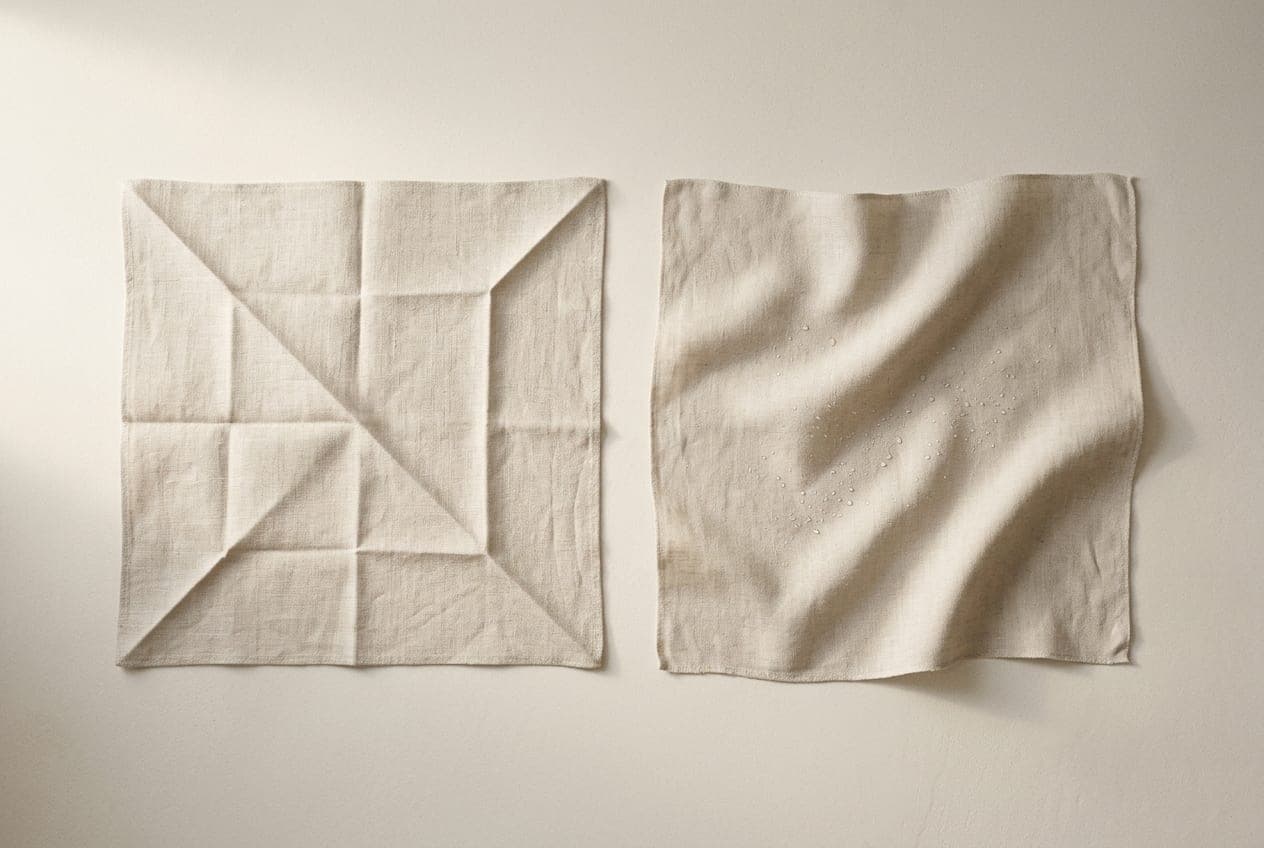
Most creases can be dealt with without an ironing board. Some cannot. Knowing which is which saves a lot of time in a hotel room.
The five methods
1. The shower. Hang the garment in the bathroom, close the door, run the shower hot for ten minutes, then leave it in the steam for twenty. Works on most things and requires nothing.
It is steam that relaxes creases, not water, so keep the garment away from direct spray. Give it space — a crumpled garment in a tight bathroom will not straighten.
2. A damp hand and gravity. For light creasing, hang it, wet your hands, and smooth firmly downwards along the crease. The combination of slight moisture, warmth and weight does more than it sounds.
Fastest method on the list and surprisingly effective on jersey and knits.
3. A hot mug or a flat, warm surface. For a collar, a cuff or a small patch, a mug of just-boiled water pressed against the fabric with something firm behind it does the job of a small iron. Test on a hidden area first.
4. A tumble dryer with a damp cloth. Put the garment in with a small damp towel and run it on low for ten minutes. The combination of gentle heat and moisture works well.
Only for garments that can take a dryer at all — not wool, not silk, not viscose, not anything with elastane you care about.
5. Wrinkle-release spray, or a home-made version. A light mist of water with a drop of fabric conditioner, then smooth by hand and hang. Genuinely effective on synthetics and cotton blends.
Mist lightly. Wet patches dry into their own marks.
What works on what
| Fabric | Best method |
|---|---|
| Cotton shirting | Shower steam, or a hot mug on the collar |
| Linen | Accept it, or steam while damp |
| Wool | Hang it and wait — wool drops its own creases |
| Silk | Shower steam only, never direct heat |
| Viscose | Shower steam, gently — it is weak when damp |
| Polyester | Wrinkle spray, or a dryer with a damp cloth |
| Knitwear | Damp hands and smoothing, dried flat |
The ones you cannot fix this way
Linen creases as a property of the fibre. Steam softens it; nothing removes it short of a proper press while damp. Buying linen means accepting this — the alternative is a linen blend, which creases considerably less.
A pressed-in crease down a sleeve or a trouser leg — the double crease, or tramline, where an iron has set a second line beside the one you wanted — will not come out with steam. That needs an iron and usually a damp cloth.
Anything with a permanent pleat should be left alone. Steam can relax the pleat you want to keep.
Preventing it instead
- Hang things immediately after they come out of the machine, while still slightly damp. This alone removes most of the problem.
- Shake each garment out before hanging. Ten seconds.
- Do not overfill the machine. Creases are set in the spin, and a packed drum sets them hard.
- Reduce the spin speed for anything you care about.
- Roll rather than fold when packing. Rolling creates soft curves rather than hard lines.
The fabric decision
If creasing genuinely irritates you, buy for it. Merino wool, modal, lyocell and jersey knits all resist creasing well; linen and cotton poplin do not.
Reading a composition label covers how to check before you buy, and the holiday capsule covers which fabrics survive a suitcase.