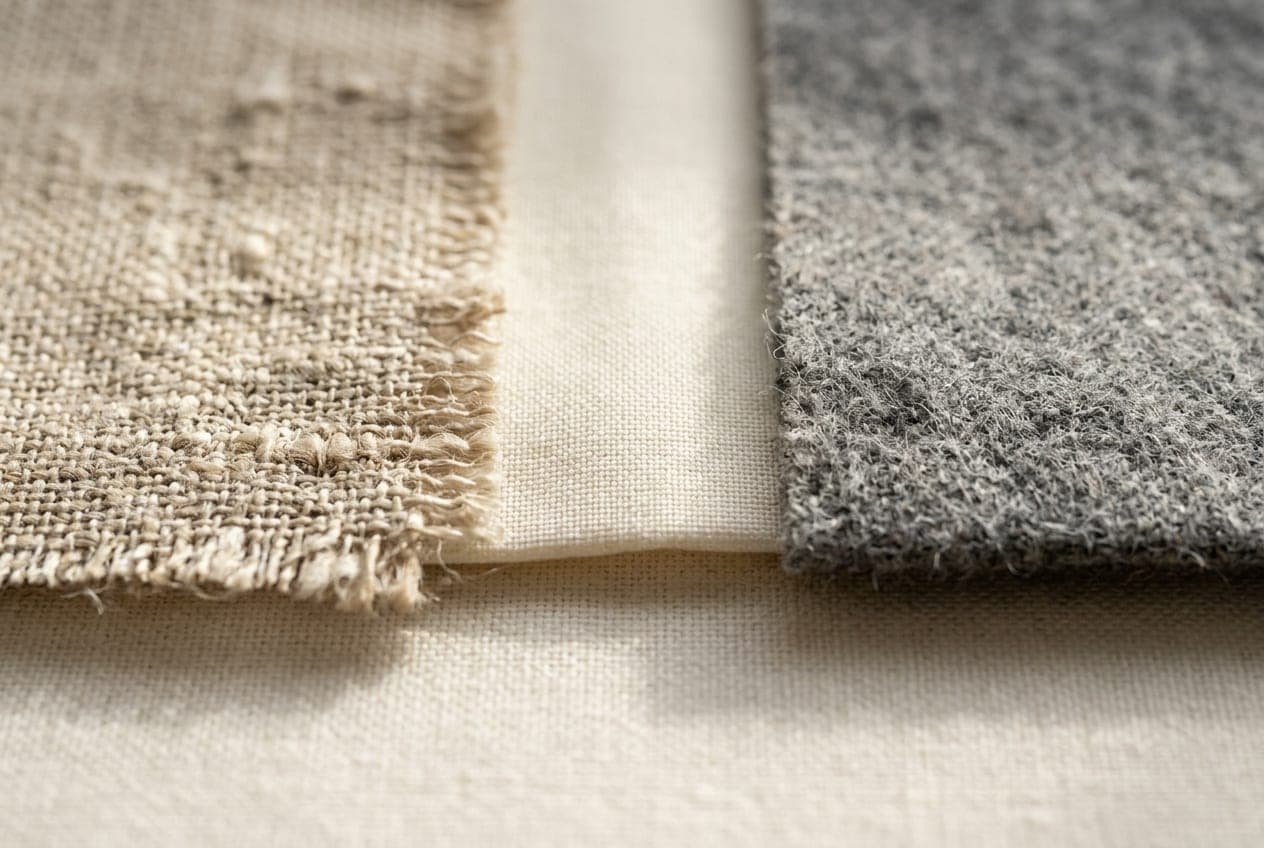
Knitwear is where the gap between what something costs and what it is worth opens widest. Two jumpers at the same price can differ enormously in how they wear, and almost all of the difference is visible in the shop if you know what you are handling.
The companion piece on what makes a knit worth the money covers construction. This is the buying trip.
Weight tells you more than fibre
The first thing to do is pick the jumper up. Not look at it — hold it.
Density is the single best predictor of how a knit will age. A dense, substantial knit holds its shape, resists pilling and keeps its structure through washing. A light, airy one at the same price has had yarn removed to save money, and it will stretch, sag and thin at the elbows.
This is why a lambswool jumper with real weight often outlasts a thin cashmere one, despite cashmere being the more prestigious word on the label.
The stretch and recovery test
Take a section of the hem or the cuff between your hands and pull it gently, then let go.
Good knitwear springs back to where it was. Poor knitwear stays slightly stretched, and that is exactly what will happen to the cuffs, the hem and the neckline over a season of wearing and washing. A neckline that has gone slack is the most common reason a jumper stops being worn, and this ten-second test predicts it.
Do the same at the shoulder seam if there is one. It should not gape or ripple.
What the composition actually predicts
| On the label | What it means in wear |
|---|---|
| Merino wool | Fine, warm, holds shape well, machine-washable if stated |
| Lambswool | Robust, warm, excellent value, slightly less soft |
| Cashmere | Warmest by weight, softest, pills readily, needs care |
| Cotton | Cool, holds shape poorly, stretches at the elbows |
| Acrylic | Cheap, does not breathe, pills quickly and permanently |
| Nylon or polyamide in small amounts | Usually a good sign; adds strength at wear points |
| Viscose in large amounts | Drapes well, loses shape, sags with wear |
The useful nuance: a small percentage of a synthetic is often an improvement rather than a compromise. Around five per cent nylon in a wool knit meaningfully increases how long the elbows and cuffs last. Thirty per cent acrylic is a different thing entirely, and it is there to reduce the price.
Reading these quickly is covered in reading a composition label.
Pilling, honestly
Everything pills. Fibres migrate to the surface under friction, and friction is unavoidable — a bag strap, an arm against a side, a seatbelt.
What differs is whether the pills fall away or stay. Longer fibres and tighter spinning produce knits that shed their pills; short fibres loosely spun produce pills that stay attached and multiply. That is why cheap acrylic looks permanently fuzzy after a month and good lambswool looks fine after three years, with the same amount of rubbing.
It is manageable either way, and how to remove bobbles from knitwear covers the practical side. But it is worth knowing that a cheap knit is not just cheaper — it is a different maintenance commitment.
What to buy, in order
If you are building rather than replacing, this is the order that gets the most wear:
- A fine-knit crew or roll neck in a neutral. Layers under everything, wears with everything.
- A mid-weight jumper in a colour that suits you. The one that gets worn on its own.
- A heavy knit or cardigan. Warmth, and the open front is useful for layering.
The colour on the second one matters more than the others because it sits next to your face without a collar between. If you know your season, spend it here; the colour hub covers which shades work, and the free quiz gets you to a season in two questions.
Before you pay
Knitwear is one of the categories where the same specification appears at very different prices, because the brand name does a lot of the pricing work. Checking what an equivalent composition and weight costs elsewhere is worth two minutes — DUPI takes a photo of something you have seen and finds the closest matches at prices that are actually listed.