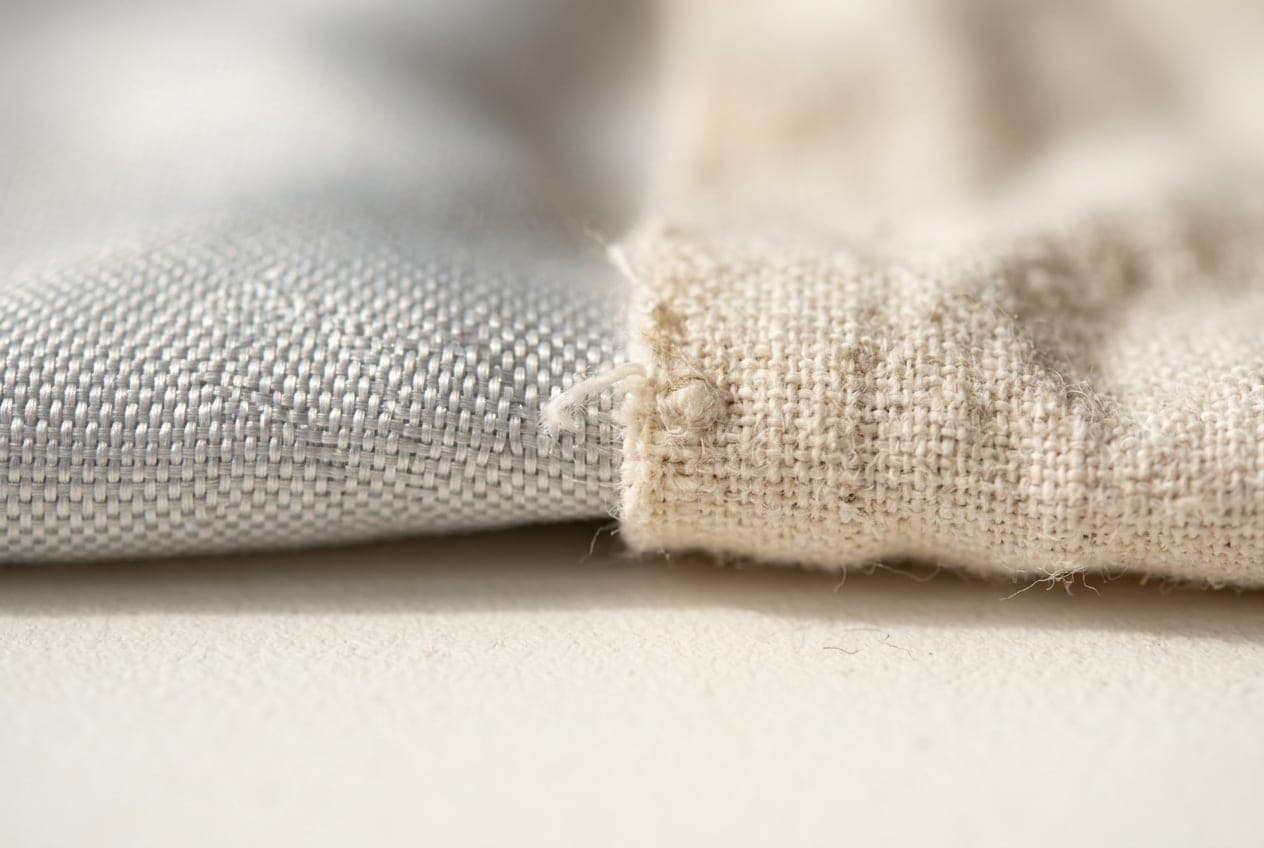
Polyester has a poor reputation, some of it deserved and much of it applied indiscriminately. It is a tool with specific strengths, and treating it as uniformly bad leads to worse buying decisions rather than better ones.
Where polyester genuinely wins
Outerwear. A waterproof or wind-resistant coat is polyester or nylon, and there is no natural equivalent. Wool is warm when damp but it is not waterproof, and it is heavy. This is not a compromise; it is the correct material.
Durability under abrasion. Bags, linings, straps and anything that rubs. Polyester outlasts cotton considerably.
Recovery and shape retention. A small amount in a blend helps a garment hold its shape through wear and washing. A wool-polyester suit creases less than pure wool and survives more.
Cost and care. It washes at low temperatures, dries quickly, and does not shrink or need pressing. For a school uniform, a work shirt or anything washed twice a week, this is a genuine advantage.
Print and colour. It holds bright colour and sharp print in a way natural fibres do not, and does not fade as fast.
Where it genuinely lets you down
Next to the skin, for a long day. This is the real complaint. Polyester does not absorb moisture — it moves it along the surface or traps it. A polyester blouse is fine for two hours and unpleasant for eight, and it is why polyester holds odour more than cotton or wool.
Heat. It does not breathe, so it is uncomfortable in summer and in overheated rooms.
Drape, in cheap versions. Poor-quality polyester hangs stiffly and has a plasticky sheen that reads cheap immediately. Good polyester — finer filaments, better finishing — can drape beautifully, which is why some expensive garments contain it without anyone objecting.
Pilling. Blended with cotton or wool it pills at friction points, and the polyester content is usually why.
The environmental picture, honestly
Polyester is made from petroleum, does not biodegrade, and sheds microplastics in the wash. Those are real.
The counter-argument is less discussed but not trivial: it is durable, it washes cold, it does not need tumble drying, and a polyester garment worn two hundred times may well have a lower total footprint than a natural-fibre one worn ten times and discarded. Longevity does a lot of work in these calculations.
A washing bag designed to catch fibres reduces shedding meaningfully if this concerns you.
How to judge it on a label
The percentage and the position tell you what you are buying.
- 1–5% in a stretch garment — usually elastane's partner, doing a useful job
- 10–30% blended with wool or cotton — a trade of some breathability for durability and shape retention, often sensible
- 50%+ — polyester is the garment. Fine for outerwear, a bag or a print dress; think twice for anything against the skin all day
- 100% in a lining — normal and largely fine
The pattern worth avoiding is the one where a cheap fibre dominates and an expensive one appears in token amounts. 5% wool in a 95% polyester coat changes the label rather than the coat.
Reading a composition label covers the rest, and what makes a knit good quality covers checking the garment rather than the label.
The short answer
Buy polyester for outerwear, bags, linings, prints and anything washed constantly. Avoid it for a blouse you will wear for a full day, and for summer. Judge it by percentage and position rather than by presence.