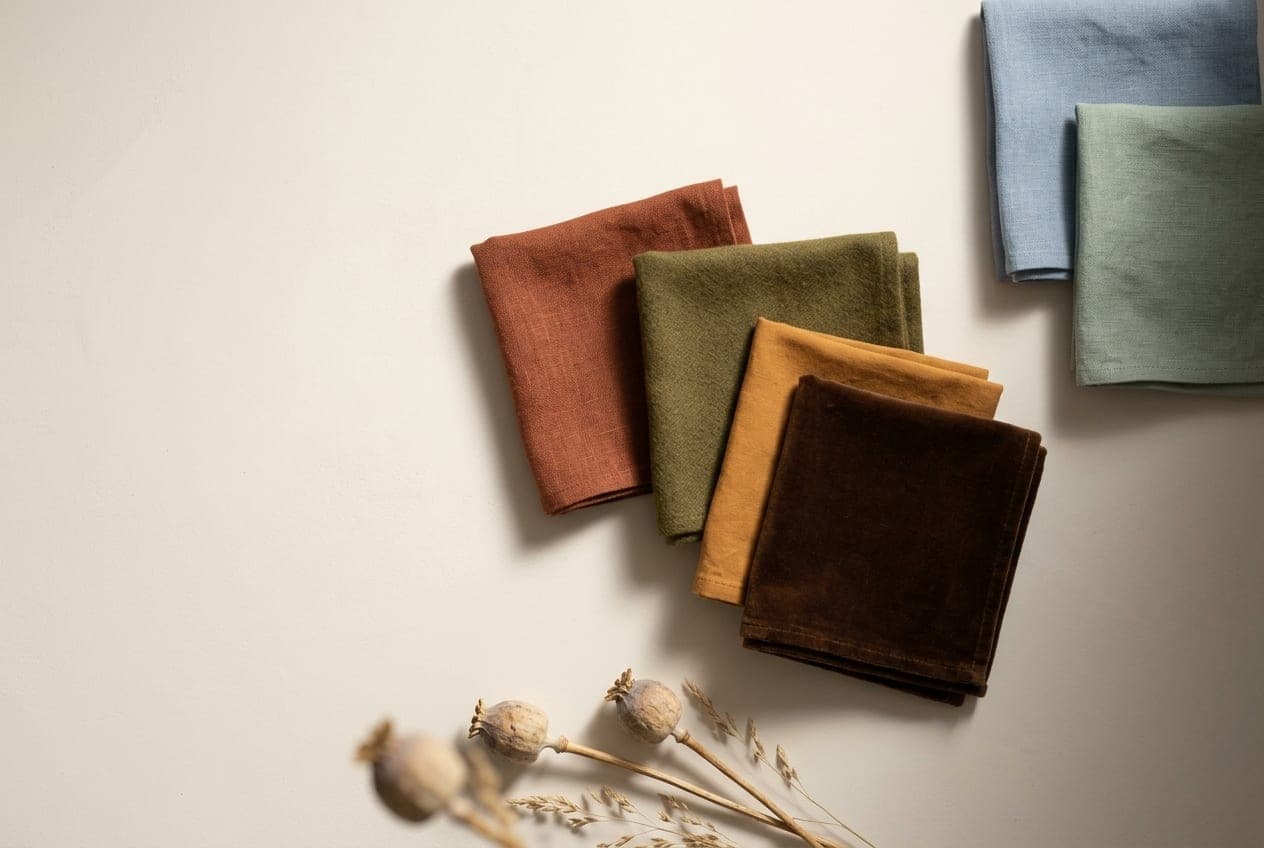
Working out that you are an Autumn is the easy half. The useful half is what happens next: which of the things already hanging up are working, which are quietly making you look tired, and what to buy the next time a coat wears out.
The Autumn season page covers how to tell. This is the other job — what to actually do about it.
Start with neutrals, not the exciting colours
Most people begin a new palette by hunting for the statement shades. That is the wrong end of the problem. Neutrals are the majority of what you own and almost all of what you wear on an ordinary Tuesday — the coat, the trousers, the bag, the boots. Get those right and the palette keeps working on the days you never think about it.
An Autumn's neutrals are warm and deep: espresso, chocolate, camel, warm taupe, olive, cream.
The single highest-value change available to most Autumns is swapping black out of the anchor positions. A deep warm brown does everything black does — reads as formal, goes with the rest of the wardrobe, hides a spill — without the cold shadow black throws across warm colouring. Espresso is the direct replacement. Camel is the lighter one, and it is the reason camel coats have the reputation they do.
Cream beats optic white by a distance. If you own one white shirt and it has never quite looked right, the shirt is probably fine and the white is probably wrong.
The colours worth committing to
Autumn is the earth palette, and it is broader than people expect: rust, terracotta, brick, warm burgundy, mustard, ochre, olive, moss, forest, deep teal, and the warm browns that double as neutrals.
One correction worth making early. Hearing the word Autumn, a lot of people reach for muted and stop there. Only Soft Autumn is genuinely muted. True Autumn and Deep Autumn carry saturated colour at full strength and look underdressed in a wardrobe of beige. If you have been dressing quietly and feeling slightly invisible, that is the likeliest cause.
Deep teal is the one to try if you want something that is not obviously autumnal. It sits in the palette, it reads as a cool colour to everyone else, and it does the job navy does for other seasons.
The swaps, in one table
This is the whole article compressed. Each row is a like-for-like replacement, not a restriction.
| Instead of | Reach for | What changes |
|---|---|---|
| Black coat | Espresso, chocolate, camel | The face keeps its warmth instead of sitting in shadow |
| Optic white shirt | Cream, ecru, warm off-white | Skin reads golden rather than sallow |
| Cool mid-grey knit | Warm taupe, olive, moss | Stops the greying effect grey has on warm colouring |
| Icy pastels | Warm apricot, soft moss, muted coral | Keeps the warmth instead of fighting it |
| Cool raspberry or fuchsia | Brick, rust, warm burgundy | Reds that settle instead of turning the skin pink |
| Silver hardware and jewellery | Gold, bronze, copper | The metal stops looking like it belongs to someone else |
| Cold inky navy | Warm navy, deep teal | Same formality, none of the coldness |
The four things that let Autumns down
Black near the face. Not black as a concept — black in the top half. A black polo neck is the hardest version of this. If you love a black coat, keep it and put a rust or cream scarf between it and your face; almost all of the damage is done in the few inches under the chin.
Optic white. The brilliant blue-white of a technical shirt or a bright trainer. It makes warm skin look faintly yellow, which is exactly the effect nobody is going for.
Cool pastels. Baby blue, icy pink, lilac. These are Summer colours and they read as washed-out on golden colouring.
Cool grey. The most common one, because grey is sold as a safe neutral. For an Autumn it is not neutral at all — it actively greys the skin. Warm taupe is the replacement and nobody will notice you have made a change.
What to do with what you already own
Do not empty the wardrobe. That is expensive and unnecessary, and it is not how anyone actually dresses.
Three moves get you most of the way:
- Move the wrong colours downwards. Colour does its work near the face. Black trousers, cool grey jeans and a white trainer are close to harmless. The same colours in a jumper are not.
- Buy the next replacement in the right colour. You are going to replace a coat, a jumper and a pair of boots at some point anyway. Spending the palette on those, as they come up, costs nothing extra.
- Use a layer as a buffer. A cream shirt under a black jacket, or a rust scarf over a grey jumper, puts a warm colour where it counts and leaves everything else alone.
If a garment is genuinely wrong and you never reach for it, that is worth knowing too — cost per wear on something you avoid is not a bargain regardless of what it cost.
Then narrow it down
Autumn splits three ways, and the differences are large enough to matter when you are spending real money. Soft Autumn wants everything greyed and gentle. True Autumn wants full warmth at full strength. Deep Autumn takes the darkest, richest end and can carry near-black in a way the other two cannot.
If you are not sure which, the free colour quiz confirms the parent season, and DUPI reads the sub-season from a single photograph — then shows you what it finds at prices that are actually listed.